ACTIVITIES
An Overwhelmed Hospital
Monday, 04 March de 2024 12:00h
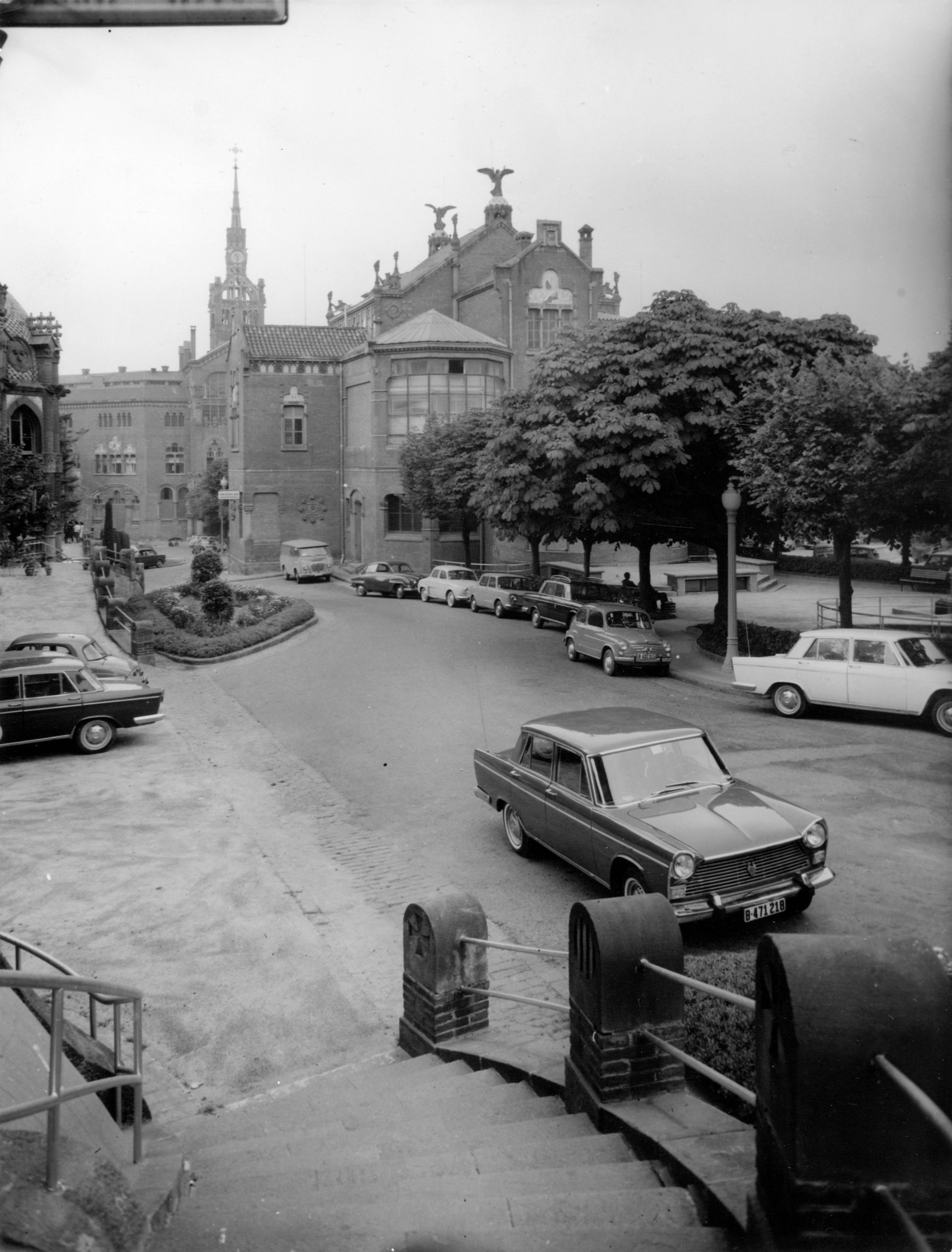
Since their inauguration in 1930, the pavilions of the Hospital de la Santa Creu i Sant Pau have undergone numerous modifications in response to the healthcare needs of a growing city, while also having to adapt to the standards of medical practice of each period.
)
The Hospital de la Santa Creu i Sant Pau, still under construction, around 1923
By 1966, it had already become clear that the pavilion-based structure no longer adequately met the Hospital’s needs and that, in order to bring it up to modern standards, a new building was required to centralise all healthcare activity. A project was eventually approved, but a lack of funding made it unfeasible, leaving no alternative but to continue adapting the existing spaces to emerging needs, even at the expense of the architectural heritage.
)
Subdivision of the Sant Salvador Pavilion into individual rooms, 1973
Although the architectural value of the Hospital began to receive greater recognition in the 1970s, the lack of resources meant that only emergency repairs could be carried out on a complex that was already in a precarious condition. In 1978, the Hospital was declared a Historic-Artistic Monument by the Spanish Government, and from then on there were growing calls for its restoration.
)
Damage to the façade of the Sant Rafael Pavilion, 1978
In 1980, the exterior of the Mercè Pavilion was restored, the first major restoration project in Sant Pau’s history, followed a few years later by work on the Administration Pavilion. The exteriors of the patient pavilions (rotundas, water towers and roofs) were gradually restored, with all work carefully planned to avoid disrupting the Hospital’s daily healthcare activity, as it was one of the most important hospitals in Spain.
)
Scaffolding for the restoration of the façade of the Administration Pavilion, 1984
In 1990, the Government of Catalonia joined the Molt Il·lustre Administració, the Hospital’s governing body, with a commitment to construct a new building that would address the functional shortcomings identified decades earlier. However, until the project could become a reality, the most pressing needs had to be met by adding new structures to accommodate the services of a Hospital on the verge of collapse.
)
Construction of a prefabricated building for outpatient services, 1995
The growing recognition of the Hospital’s architectural value, achieved while maintaining high-level healthcare activity, culminated in its designation as a UNESCO World Heritage Site in 1997. It is the only hospital in the world to have received this distinction while still in active use.
)
Commemorative tile marking the UNESCO World Heritage designation, 1997
Construction of the long-awaited new hospital building began in 2001 and was completed in 2009, when all clinical services finished moving to the new facilities and permanently left the Modernista pavilions.
)
Transfer of the Neonatology Unit to the new hospital, 2009
That same year, an ambitious and highly complex restoration process began, which also involved defining a new plan for the use of the pavilions, now that they had lost their original function.
)
The Sant Pau Art Nouveau Site undergoing restoration, 2011

 Tickets


